|
 |
 |
|
Today's Events
|
|
Sat, May 10 2008
|
|
We have 13 guests and 0 members online
Welcome Guest, become a member today.
|
|
 |
 |
 |
|
Academic Papers: Book Review: The Constitution of Law: Legality in a Time of Emergency by David Dyzenhaus (New York: Cambridge University Press, 2006). 250 Pages.
Posted by: Admin on Thursday, April 17, 2008 - 01:51 PM
|
|
 |
| |
373 Reads
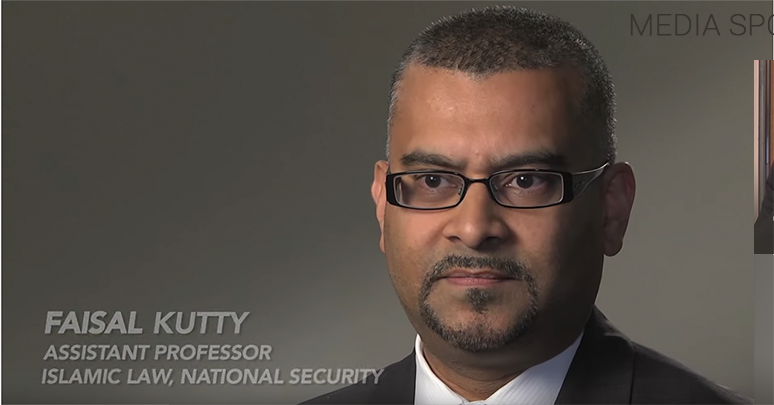
By FAISAL KUTTY
York University - Osgoode Hall Law School
Abstract:
The terrorist attacks on September 11, 2001 and the ensuing war on terror has brought to the fore a number of issues that were not previously centre stage in legal discourse. The question about the limits of the rule of law during times of crisis is one such issue. David Dyzenhaus's new book explores this very issue and raises a number of interesting and fresh arguments against those who contend that extraordinary times demand extraordinary powers that enhance legislative or executive authority at the expense of the rule of law, rights and judicial review.
Much of the debate and prescriptive recommendations we see in recent scholarship on national security are framed within the broader realm of the state of exception or state of emergency. The normalcy-rule, emergency-exception paradigm has been adopted as normatively desirable by most of the legal and political thinkers who have considered the subject of emergencies and emergency powers. The essential dilemma that these theorists are attempting to deal with is: should a democracy that is confronted with a serious existentialist terrorist threat respond with countermeasures which may or may not be effective but challenge fundamental principles of the democratic and liberal order?
There is, of course, no better way to explore these controversial issues than by setting out to answer Carl Schmitt's challenge to liberal legal theory, which is essentially that the claim that a response to an emergency situation has in the nature of things to be partly or even wholly exempted from the requirements that we associate with the rule of law in normal times.
In this book and some of his other work, Dyzenhaus has attempted to respond to Schmitt as well as to those who fall short in their own attempts to defend liberal legal theory from Schmitt's attack. Overall, Dyzenhaus's volume is a wonderful addition to the growing literature responding to Schmitt's challenge and to those who argue that the rule of law is optional for liberal democracies in times of emergencies. As any good book does, it raises as many good questions as it attempts to answer.
Click here to read the rest of this book review.
|
|
 |
 |
 |
|
 |
 |
 |
 |
|
OPINION: No-fly lists provide false sense of security - How can someone be too guilty to fly and yet be too innocent to be charged on the ground, asks Faisal Kutty
Posted by: Admin on Tuesday, May 15, 2007 - 10:15 AM
|
|
 |
| |
1385 Reads
By Faisal Kutty
TORONTO, ONTARIO -- "Nothing personal sir, but your packages are not allowed on passenger airlines," said a United Parcel Service customer service agent, sitting in an American call centre. She was explaining to me that my package could not be delivered on an "early a.m." basis from Toronto to Peterborough.
I was interrogating the agent about why this was so, since I had been using UPS without any problems since starting my practice in 1996. Initially reluctant, the agent eventually confessed that when my account number was entered into their system, the "Flight Guardian" software flashed a red signal.
Note: Faisal Kutty, a Toronto lawyer and doctoral candidate at Osgoode Hall Law School at York University, is also vice-chair and counsel to the Canadian Council on American Relations.
|
|
 |
 |
 |
|
 |
 |
 |
 |
|
Lives Lived: Mohamed Merchant
Posted by: Faisal on Thursday, March 08, 2007 - 12:18 PM
|
|
 |
| |
1886 Reads
By FAISAL KUTTY
TORONTO, ONTARIO --Husband, father, brother, friend, mentor. Born July 1, 1936, in Trichur, Kerala, India, Died Dec. 17, 2006, in Malton, Ont., of esophageal cancer, aged 70.
After about two years in college preparing for medical school, realities of life caught with Mohamed Merchant and forced him to earn a living. Starting out as a driver, he went on to become a doctor's assistant and then a pharmacist before coming to Canada in 1972. Like many of the newcomers he later helped, he initially entered the job market as a security guard and then did a stint as an old-age home nurse. The last 20 years of his working life were spent as a chemical plant operator. Sadly, the cancer diagnosis came within three years of his retirement.
Note: Faisal Kutty is a friend of Mohamed Bhai.
|
|
 |
 |
 |
|
 |
 |
 |
 |
|
COMMENT: Human rights as we know them: a western construct
Posted by: Admin on Tuesday, December 05, 2006 - 02:34 PM
|
|
 |
| |
2160 Reads
By Faisal Kutty
TORONTO, ONTARIO -- Fifty-eight years after the universal declaration of human rights was adopted by the United Nations General Assembly, the debate continues as to whether the documentis truly universal.
Upon its adoption on Dec. 10, 1948, former U.S. First Lady Eleanor Roosevelt, chair of the commission on human rights, expressed her hope it would become “the Magna Carta of all mankind.” Ironically, as was the fate with the “great charter” of 1215, the declaration has not fully lived up to its name.
Click Here to read the rest of this article.
|
|
 |
 |
 |
|
 |
 |
 |
 |
|
Others seek answers, too - Justice O'Connor releases his report today, amid growing unease among Muslim and Arab citizens over allegations of Canadian complicity in detention abroad
Posted by: Admin on Monday, September 18, 2006 - 06:42 PM
|
|
 |
| |
2195 Reads
By Faisal Kutty
Toronto Star - Sep. 18, 2006 -- Since the tragic events of 9/11, many Muslims and Arabs have been living in a climate of fear and uncertainty. The draconian and hastily enacted Anti-Terrorism Act and questionable national security practices have had a profound effect on their psyche.
Arguably, times have changed. One of the most pressing contemporary debates in liberal democracies today is whether to trade off rights for greater security. Seems neutral in theory, but all members of society do not equally bear this burden. Canadian Muslims/Arabs are increasingly realizing that trading off rights mean, more specifically, forfeiting their rights.
Note: Faisal Kutty, a lawyer with Kutty, Syed & Mohamed, is counsel to the Canadian Council on American Islamic Relations, an intervener in the Maher Arar Inquiry, and in the more recently constituted Air India Inquiry.
|
|
 |
 |
 |
|
 |
 |
 |
 |
|
Good intentions are not good enough: Proposed changes weaken the enforcement powers of Human Rights Commission
Posted by: Faisal on Monday, June 26, 2006 - 06:06 AM
|
|
 |
| |
2283 Reads
By Faisal Kutty
The Toronto Star, Jun. 26, 2006 -- At the time of its enactment in 1962, the Ontario Human Rights Code was ahead of its time in prohibiting discrimination and harassment on enumerated grounds — now numbering 16.
Sadly, the system that consists of the Ontario Human Rights Commission and the Human Rights Tribunal has not kept pace with the demands of a changing society. In fact, over the past 15 years, numerous studies, reports and consultations have concluded the system is broken.
The Dalton McGuinty government must be commended for taking the initiative to improve the system. So why did a coalition of human rights groups, community organizations and prominent individuals sign an open letter last week asking Attorney General Michael Bryant to slow down?
Clearly, the government has the right intention in introducing Bill 107 (Human Rights Code Amendment Act, 2006), but good intentions are not always good enough. In fact, the proposed amendments do little to correct the deficiencies and, in fact, weaken our human rights system even more.
The necessity of a strong human rights protection and redress system was reinforced by the 1981 Supreme Court decision in Seneca College v. Bhaduria.
The court refused to recognize a tort of discrimination, and essentially recognized the exclusive jurisdiction of the Tribunal in granting remedies for human rights violations. The ostensible reasoning was that the provincial legislative initiative encapsulated in the Code superseded the common law.
Under the current system, once a complaint is filed, the commission investigates the matter and guides the complainant through the process. If the resolution is unsatisfactory to the complainant or the commission (acting in the public interest), then the commission is empowered to take the matter to the tribunal. At this stage, the commission essentially takes on the role of a prosecutor and advocates for the complainant.
Bill 107 not only eliminates this investigative and prosecutorial role by giving complainants direct access to the tribunal, but goes even further and reduces the commission's power to initiate its own complaints.
Direct access to the Tribunal may sound good in theory, but the formality of the process and lack of commission support will intimidate even more from pursuing justice. Moreover, the tribunal's expanded grounds to dismiss complaints without a hearing may speed up the process, but will not serve the cause of human rights. A hybrid system, whereby the complainant has choice of whether to proceed through the commission or go directly to the tribunal may be a better alternative.
The current system is seriously backlogged and lacks any real teeth in terms of deterrence. Far from alleviating the problems, the proposed amendments, which also include a potential user fee and no guarantee of legal representation, will preclude even more people from using the system effectively.
In the current climate of rising discrimination, racism, anti-Semitism and Islamophobia, a strong Human Rights Commission is a necessity to preserve social cohesion in our increasingly multicultural society. There is broad consensus among the front-line organizations that a number of serious issues must be reconsidered, including the following:
Retaining and expanding the investigative role of the commission.

Mandating adequate funding for legal representation of complainants. As it stands under the bill, such funding is discretionary.
The tribunal must not be able to override the "due process" provisions of the Statutory Powers Procedure Act.
The bill's expanded grounds for refusing a hearing need to be reconsidered.
Providing authority to the tribunal to award legal costs to a successful complainant.
Increasing the deterrence value by increasing compensation amounts. A maximum penalty of $10,000 for the most wilful and reckless violations really lacks any bite.
Any user fees must be reconsidered or structured as a refundable one if the complaint is not frivolous and vexatious.
Strengthening the system in policing, and sanctioning reprisals against complainants and whistleblowers.
These are just a few of the areas that need to be studied further. As a lawyer and human rights activist who has been on the front line in dealing with increasing discrimination against Muslims and the growth of Islamophobia, I can say that our system has fallen short.
More recently, in the wake of the arrests of 17 suspects in an alleged terrorist plot, I have personally fielded numerous calls from individuals who feel their rights are being violated.
Most find the existing system with all of its supports hard enough to navigate. The proposed amendments will only increase the likelihood that they will never get their "day in court," contrary to what Bryant said in introducing the bill.
At this critical juncture, we need a strong Human Rights Commission to ensure that human rights in Ontario are not only theoretical, but can practically be enforced.
The only way to ensure this is to proceed with caution, consult broadly and give sufficient opportunity for affected groups to properly make representations.
|
|
 |
 |
 |
|
 |
 |
 |
 |
|
COMMENT: Faith-based arbitrations in Ontario: A lost opportunity
Posted by: Admin on Monday, March 20, 2006 - 01:36 PM
|
|
 |
| |
2420 Reads
By Faisal Kutty
Lawyers Weekly
March 24, 2006
September 11, 2005 is etched in the minds of many Ontario Muslims. On that fateful Sunday, Premier Dalton McGinty announced his decision to preclude the use of any religious laws in resolving family disputes under the Arbitration Act, 1991.
The controversy erupted in the fall of 2003, when a small Muslim group led by a retired Ontario lawyer announced the formation of the Islamic Institute of Civil Justice (IICJ) to provide a framework to voluntarily resolve private disputes using Islamic legal principles. The IICJ announcement gave the false impression that the Ontario government had granted them some form of special permission to establish a “Sharia Court”.
This was neither the march of political Islam nor the establishment of a parallel court system. In fact, as the Attorney General’s office kept reiterating at the time, no changes had been made to the law since its enactment. The Act allowed parties to resolve their private disputes – commercial, ecclesiastical or family – through voluntary arbitration. Given that the IICJ was simply using existing Ontario legislation, the government had no positive duty in the process. Indeed, other religious groups had been using the Act for years.

Among the provinces 400,000 Muslims, opinions ranged from wholehearted endorsement to the genuine fear that tribunal decisions will be biased against women. Some thought of it as a panacea that would solve their inability to live as “good” Muslims.
A combination of misunderstanding, ignorance, and the careless pronouncements by both sides, as well as inaccurate and biased media coverage helped fuel a firestorm. Many uncritically accepted the misunderstanding first promoted by the IICJ and later by the media that the government had approved new “Sharia Courts” with coercive power to force all Muslims to arbitrate using Islamic laws. Opponents of political Islam and secular Muslims, who saw the initiative as the lead chariot in the procession of Islamizaton, mobilized their resources and reacted swiftly on a global level. At times the discourse verged on Islamophobia.
Due to mounting pressure from women’s groups and two secular Muslim groups, the government formally asked former attorney general and women’s rights advocate Marion Boyd to look into the issue. In her December 2004 report, Boyd was categorical: “The Arbitration Act should continue to allow disputes to be arbitrated using religious laws.” The government made no public comments on the report, but because of the political hot potato it had become decided to take the easy way out. The Premier’s decision was formalized last month with the passage of the Family Statute Law Amendment Act, 2005 (the “FSLAA”), which precludes the use of any religious laws in family law arbitrations.
Disturbingly, all three parties jointly took away a right that was available to Ontarians since 1992 without any concrete evidence of harm. They acted on speculation and against the recommendations of the government’s own report. Clearly a first in Ontario. Meanwhile, “back alley” arbitrations will continue throughout the province unregulated and unsupervised.
In the months leading up to the decision, I had been in consultation with the AG’s office on behalf of a coalition of virtually all the large national Muslim groups and it appeared that the government had no choice but to continue to allow religious arbitrations with additional checks. The groups argued that faith-based arbitrations should continue as a protected and viable option provided that it was voluntary, that all of Boyd’s recommendations were adopted and our courts would only enforce decisions consistent with Canadian laws. In essence, arbitrations using religious principles should not be rejected outright.
The Canadian Jewish Congress advanced the same view during FSLAA hearings earlier this year. The CJC also argued that faith communities should be involved in the development of the legislation’s regulations. Both suggestions were rejected outright without any reasons. As counsel Mark Freiman pointed out, the legislation and the process used to develop it appear to be based on the premise that women are intrinsically incapable of vontuntarily choosing faith-based arbitration. “It assumes that faith-based approaches to arbitration are innately exploitative,” Freeman noted. “This view is insulting to all women, and to the faiths to which Ontarians adhere.”

The discussion brought to the fore a highly charged emotional debate that has been raging silently in democratic and multicultural nations. The tension of course transcends the issue of dispute resolution and tugs at two fundamental questions. The first is how to balance the collective rights of a group with the individual rights of group members – particularly the vulnerable, women and children. The second question is how to reconcile religious rights with the separation of church and state.


Proponents of faith-based arbitrations argue that religious values can be a major part of a person’s identity and can therefore influence one’s attitude and approach to conflict resolution.
These proponents contend that they should be able to govern their lives according to their conscience within the parameters of law if the constitutional right to freedom of religion is to have any real value. Co | |